


Cracked teeth

Diagnosis and treatment for cracked teeth in Winter Garden and Central Florida

A cracked tooth can cause significant discomfort and often develops gradually without obvious warning.

Credentials and Affiliations

TDOADA
Microscope Guided Endodontics
CBCT 3D Imaging
GentleWave System

What is a cracked tooth

Incomplete fractures can create pain long before they are easy to see

A cracked tooth is a type of incomplete fracture that usually begins in the crown of the tooth and may extend toward the root. Cracks are most commonly found in back teeth, especially molars that absorb the greatest chewing forces.

If left untreated, a crack can deepen over time and allow bacteria to enter the pulp of the tooth. When that happens, inflammation or infection may develop and root canal treatment may be recommended to help save the tooth.

Common causes Cracks often result from cumulative stress on the tooth over time

Biting on hard foods such as ice or nuts, or years of heavy chewing forces in the back teeth

Teeth grinding or clenching, large fillings, sudden temperature changes, or age related enamel wear

Trauma or injury to the tooth, especially when the remaining tooth structure is already weakened

Symptoms and candidacy

When cracked tooth symptoms should be evaluated by an endodontist

One of the biggest challenges with cracked teeth is that symptoms may come and go. A tooth can feel normal for part of the day and then become painful when chewing, exposed to temperature, or stressed in a certain way.

Symptoms

Pain that is sharp, inconsistent, or hard to pinpoint

Cracked teeth often cause discomfort that feels different from typical decay or gum irritation.

  • Pain when biting or when pressure is released
  • Sensitivity to hot or cold temperatures
  • Intermittent pain without an obvious cause
Urgency

Early care improves the odds of saving the tooth

Small cracks can worsen if they are not stabilized and protected with appropriate treatment.

  • Swelling or inflammation around the tooth
  • Difficulty chewing on one side
  • Pain that keeps returning when you eat

Who may be a good candidate

Signs retreatment may be worth considering

Not every previously treated tooth should be retreated, but many can be. The key question is whether the tooth remains restorable and whether there is a clear clinical reason to believe another attempt can improve the outcome.

Symptoms

Pain that returned after a prior root canal

Some teeth become symptomatic again because infection persisted in difficult anatomy or reentered through a leaking restoration.

  • Recurring pain or pressure when chewing
  • Lingering tenderness in a previously treated tooth
  • Intermittent flare ups months or years later
Referral reasons

A previous root canal that deserves a specialist review

Your general dentist may refer you when the diagnosis is unclear, when symptoms do not match the X rays well, or when advanced technology is needed to decide whether retreatment or another option makes the most sense.

  • Missed canal suspicion or complex anatomy
  • Calcification, posts, or restorative obstacles
  • A tooth you hope to save if there is a predictable path forward

What to expect

How cracked teeth are diagnosed and treated

01

Comprehensive examination

Advanced testing helps identify the location and severity of the crack, especially when symptoms are intermittent or difficult to reproduce.

02

Advanced imaging and magnification

High resolution digital imaging, limited field CBCT scans, transillumination, and microscope assisted evaluation help reveal root structures, surrounding bone, and very small fractures.

03

Endodontic treatment and protection when needed

If the pulp is affected, root canal therapy removes inflamed or infected tissue so the tooth can be preserved. Your general dentist then typically places a crown to strengthen the remaining structure and help prevent further cracking.

How endodontics helps save cracked teeth

When a crack extends into the pulp of the tooth, bacteria can trigger inflammation or infection. Research has shown that cracked teeth treated with endodontic therapy often have favorable outcomes, with reported survival rates ranging from about 75 percent to 100 percent depending on crack extent and final restoration. Other studies have reported survival around 84 percent after five years, showing that saving the tooth is often possible with appropriate care.

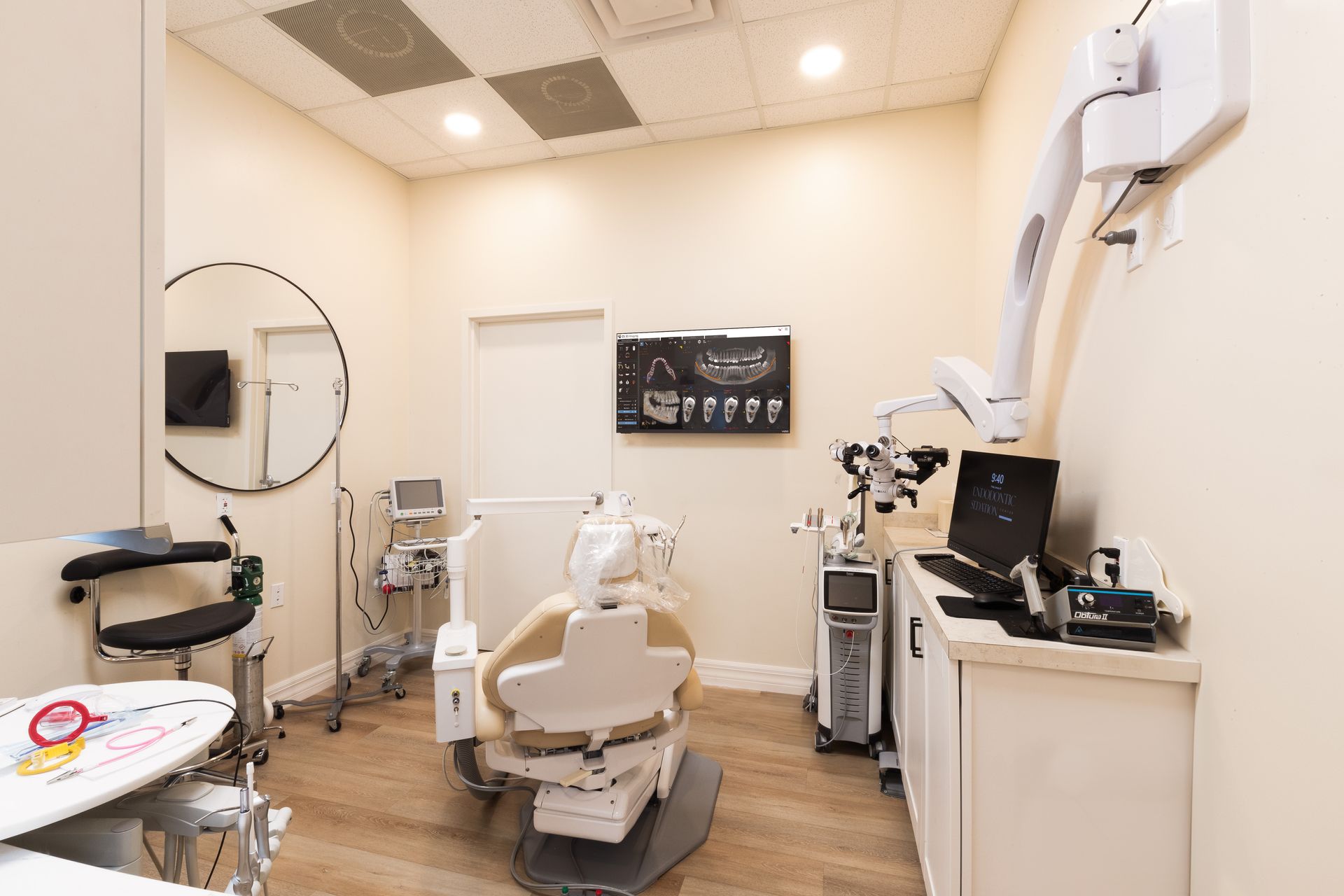
Modern Dreyer office treatment setting

Advanced technology for diagnosis

Modern tools help identify cracks that standard imaging can miss

Because cracks can be extremely difficult to detect, modern endodontics relies on advanced tools to improve diagnostic accuracy and support conservative treatment planning.

Dental operating microscopes

Magnification and illumination help the endodontist visualize fine fractures, hidden anatomy, and small details that can influence treatment decisions.

3D CBCT imaging

Three dimensional imaging can help evaluate root structures and surrounding bone more precisely than standard two dimensional radiographs when additional detail is clinically indicated.

Digital imaging and ultrasonic instruments

These tools support detailed evaluation and conservative treatment while helping preserve as much natural tooth structure as possible.

Why patients choose our office Focused endodontic care for Winter Garden and surrounding Central Florida communities
01

Advanced diagnostic technology and precision endodontic treatment for complex cracked tooth cases

02

State of the art imaging, microscope assisted care, and a calm patient centered environment

03

Collaboration with referring dentists serving Winter Garden, Windermere, Ocoee, Clermont, Horizon West, and greater Central Florida

What happens if a cracked tooth is left untreated?

If a crack deepens, bacteria may enter the pulp and lead to inflammation, infection, swelling, or more extensive structural damage. In many cases, earlier treatment significantly improves the likelihood that the natural tooth can still be saved.

Who is a good candidate for treatment?

Patients experiencing sharp pain when biting, temperature sensitivity, unexplained intermittent tooth pain, or imaging findings near the root should seek evaluation from an endodontic provider. In many cases, early intervention allows the tooth to be stabilized before the crack progresses further.

Cracked teeth often require both advanced care and a protective restoration

Endodontic treatment addresses the inside of the tooth when the pulp has been affected. The final crown placed by your general dentist is often just as important because it helps reinforce the remaining tooth structure and reduce the risk of further fracture.

FAQ

Can a cracked tooth heal on its own?

No. Tooth cracks do not heal the way bone or soft tissue can. The goal is early diagnosis, stabilization, and treatment before the crack worsens.

Does every cracked tooth need a root canal?

No. Treatment depends on the depth and location of the crack and whether the pulp has been affected. Some cracks can be restored without endodontic treatment, while others require root canal therapy to save the tooth.

Why can cracked teeth be hard to diagnose?

Cracks can be microscopic and symptoms may come and go. That is why magnification, transillumination, digital imaging, and sometimes 3D CBCT are valuable in suspected cracked tooth cases.

Are back teeth more likely to crack?

Yes. Molars and other posterior teeth absorb greater chewing forces and are more likely to develop cracks over time, especially when they also have large fillings or signs of grinding.

When should I schedule an evaluation?

If you notice pain when biting, unexplained temperature sensitivity, or symptoms that keep returning, it is wise to seek evaluation promptly. Early assessment may improve the odds of saving the tooth.

Schedule an evaluation for cracked tooth symptoms

If you are experiencing symptoms of a cracked tooth, early evaluation can help prevent further damage and increase the chances of saving your natural tooth. Our office serves Winter Garden, Horizon West, Windermere, Ocoee, Clermont, and the greater Central Florida area.