


Root canal treatment

Root canal care designed to save teeth with calm, modern precision

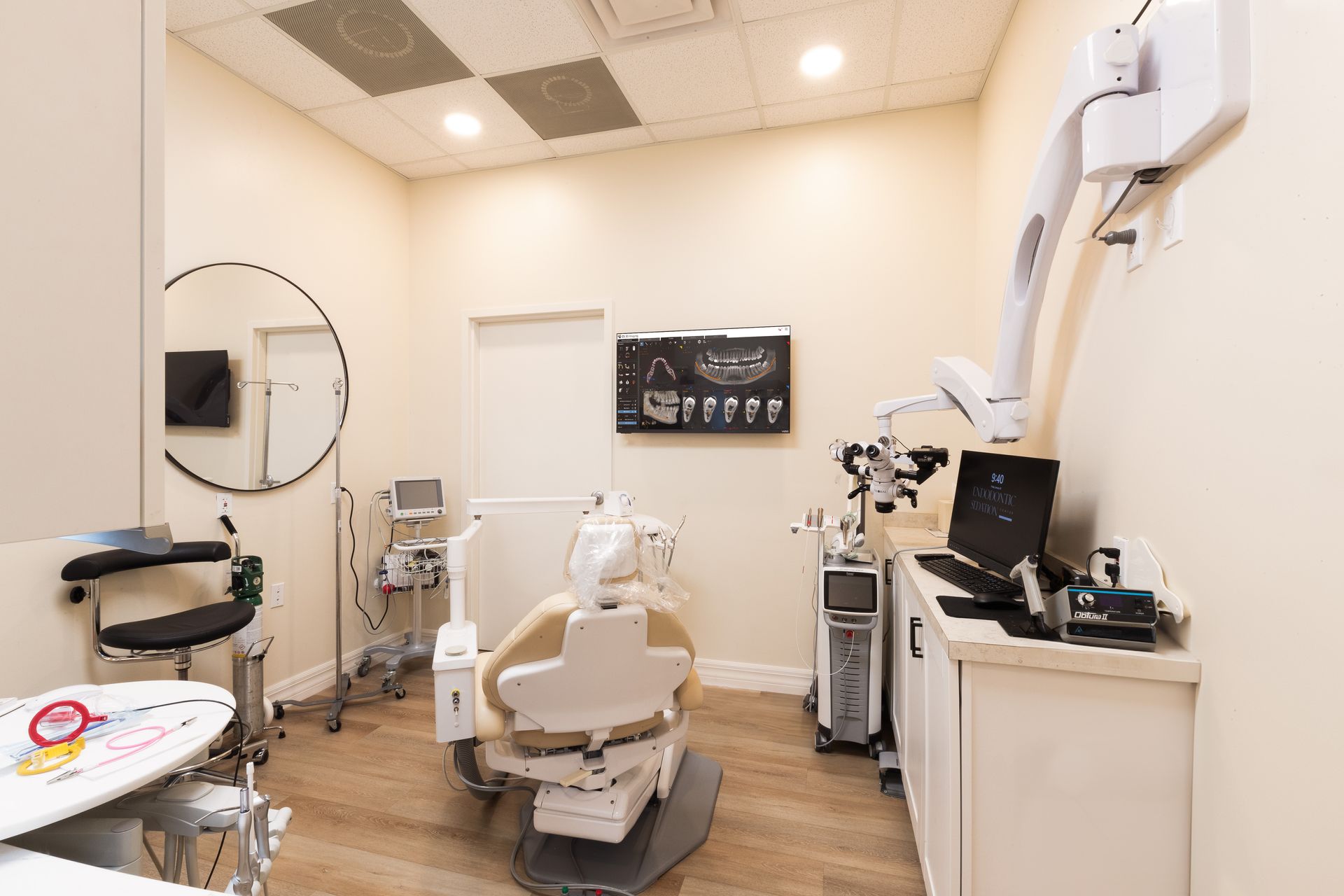
Our Winter Garden office pairs patient-focused endodontic care with advanced imaging, microscope guided treatment, and laser supported technology when appropriate.

Credentials and Affiliations

TDOADA
Microscope Guided Endodontics
CBCT 3D Imaging
GentleWave System

Why focused root canal care matters

Precision focused care designed to give natural teeth every chance to be saved

Endodontics is a field of dentistry that focuses on diagnosing tooth pain and treating problems inside the tooth. Because our office is centered on this type of care, the process is built around careful diagnosis, precision treatment, and attention to the small details that matter in canals that can be narrow, curved, calcified, or difficult to visualize.

That focus matters before treatment begins, during treatment itself, and after the tooth is sealed. The goal is not simply to complete a procedure. The goal is to give the tooth its best chance to heal and to help your restorative dentist move forward with long term protection.

Designed for Patients who want a modern, advanced approach to saving natural teeth
01

Challenging anatomy, cracks, calcification, or symptoms that require a more precise diagnosis

02

Patients who want care focused on preserving natural teeth whenever possible

03

Patients who value advanced technology, laser assisted care, and a comfort focused experience

Who is a good candidate

Signs your tooth may need root canal treatment

Not every toothache means you need a root canal, and not every tooth that needs a root canal hurts all the time. A proper exam, testing, and imaging help determine whether endodontic treatment is the right next step.

Symptoms

Pain that lingers or keeps returning

Teeth with irreversible inflammation or infection often show prolonged sensitivity to heat or cold, spontaneous aching, or pressure pain when biting.

  • Lingering hot or cold sensitivity
  • Sharp pain when chewing or tapping
  • Throbbing that wakes you up or keeps coming back
Urgency

Swelling or infection that needs attention

Infected teeth can sometimes lead to swelling, tenderness in the gums, or radiographic signs around the root. Prompt evaluation helps guide the right treatment.

  • Swelling, drainage, or a pimple on the gums
  • Darkening of the tooth after trauma
  • A tooth your dentist says needs endodontic evaluation

What to expect

How root canal treatment usually works

01

Diagnosis and planning

We review symptoms, test the tooth, and use digital radiographs or limited field CBCT when the anatomy or diagnosis needs a clearer three dimensional view.

02

Numbing and treatment

The tooth is thoroughly numbed. The inflamed or infected pulp is removed, the canals are shaped and disinfected, and magnification helps us see details that matter.

03

Sealing and next steps

The canal system is sealed, a temporary restoration is placed when needed, and your restorative dentist completes the final restoration to protect the tooth.

What recovery is usually like

Most patients do well after treatment and often feel better because the source of inflammation has been addressed. Some tenderness for a short period can be normal. The temporary filling is not meant to be your long term protection, so timely follow up with your general dentist remains an important part of the overall result.

Modern Dreyer office treatment setting

State of the art tools

What makes our office different

Modern root canal treatment is about more than hand skills alone. The right technology helps refine diagnosis, improve visualization, and support disinfection inside spaces that are too small and complex to judge with the naked eye.

3D imaging when it adds value

Limited field CBCT can be helpful when two dimensional images do not explain symptoms clearly or when anatomy, calcification, prior treatment, or hidden pathology need a more exact view.

Microscope guided treatment

Operating microscope magnification helps reveal fine anatomy, extra canals, cracks, and other details that can change treatment decisions.

Laser supported irrigation and disinfection

Laser technology can be used as an adjunct to irrigation and disinfection protocols, helping activate fluids within the canal system. It is part of a modern toolkit, not a shortcut, and treatment is chosen case by case.

Advanced workflow Precision, visualization, and disinfection working together

Imaging is selected carefully, with limited field scans reserved for cases where the added detail can improve diagnosis or treatment planning

Magnification and illumination support cleaner access, better detection of anatomy, and more controlled treatment

Advanced irrigation systems, including laser assisted protocols, are used to support canal cleaning in a conservative and modern way

Can all teeth be treated endodontically?

Most teeth can be treated. Occasionally, a tooth cannot be predictably saved because the canals are not accessible, the root is severely fractured, there is not enough bone support, or the tooth cannot be restored. That is why the quality of the diagnosis matters as much as the procedure itself.

How soon should you see your restorative dentist?

After your root canal, the final restoration is a critical part of protecting the tooth. In general, we want patients to reconnect with their restorative dentist promptly so the permanent restoration can be completed within the timeframe recommended for that tooth.

Comfort still matters

Many patients still think root canals are unusually painful. Modern endodontics tells a different story. With effective anesthesia and technology that supports efficiency and control, treatment is usually far more manageable than people expect.

FAQ

Is root canal treatment painful?

Most patients say the procedure is much easier than they expected. The goal is to remove the source of pain and infection while keeping you comfortable during treatment.

Can a tooth need a root canal even if it is not hurting right now?

Yes. Some teeth need endodontic treatment even when pain is mild, intermittent, or absent. Imaging, testing, and clinical findings matter more than symptoms alone.

Why mention lasers and advanced technology?

Because modern endodontics is about precision. Tools like limited field CBCT, microscope guided care, and laser assisted irrigation can support diagnosis and cleaning when they are used for the right case.

Will I still need a crown or filling afterward?

Very often, yes. The root canal saves the inside of the tooth, but the outside still needs proper restoration and protection from your general dentist.

What if I am nervous about treatment?

Our office also offers sedation options for patients who need additional comfort support. That conversation depends on the procedure, your health history, and your level of anxiety.

Need answers before deciding?

We can review your symptoms, discuss what to expect, and help you understand whether root canal treatment is the right next step for your tooth.